Katja Erfurth’s new work, “Partitur des Körpers” (“Score of the Body”), is being presented at Festspielhaus Hellerau in three sections dedicated to Israeli dancer and choreographer Noa Eshkol. Erfurth performs the opening solo, followed by a trio of women, while the final section unfolds in silence around a translucent textile object suspended from ropes.
The work reflects Eshkol’s approach to movement and her collaboration with architect Avraham Wachman on the Eshkol-Wachman Movement Notation, first published in 1958. The system treats the body as an ensemble of parts moving according to rules, with each part likened to an instrument.
In the opening, Erfurth dances to Paul Ben-Haim’s 1951 “Sonata for Solo Violin in G,” written for Yehudi Menuhin and performed onstage by Florian Mayer. The middle section features dancers Amit Abend, Seraphine Detscher and Helena Fernandino. Their movements use the space through shifting formations, including a triangle traced by the performers’ bodies.
For the final section, Erfurth and visual artist Sabine Köhler guide a gauze-like textile through the air on long red cords. The fabric takes on changing shapes and at one point gently envelops a dancer. The scene draws on a later chapter of Eshkol’s work: after the Yom Kippur War began in 1973 and her dancers were called up for military service, she turned to textile collages made from collected, cut and sorted fabrics and clothing. She and her collaborators produced more than a thousand tapestries and wall pieces before her death in 2007.
The production also connects Eshkol’s history to German dance. Erfurth trained at the Palucca School and has worked with the Wigman Villa. Palucca was a student of Gret Palucca, whose school in Dresden was part of the background to this lineage; Palucca later trained Tile Rössler, who emigrated to Tel Aviv in 1933 and became one of Eshkol’s teachers under the name Tehila Ressler. Ben-Haim also emigrated to Tel Aviv in 1933, changing his surname from Frankenberger.
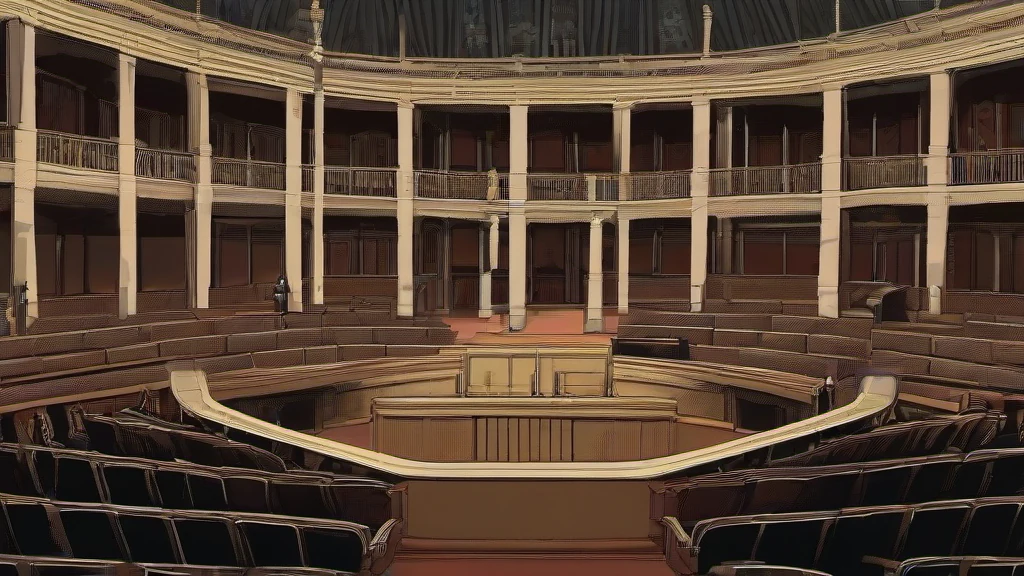
A recorded piece by Helmut Oehring, written for women’s choir, accompanies the trio, with violin interventions by Mayer. The production is part of Saxony’s year-long “Tacheles – Jewish Life in Art and Culture” programme, which ends in December. The theatre’s galleries and expansive auditorium also feature in the staging, as Erfurth moves from an upper level down to the stage before the performance develops into its solo and ensemble sections.
Sources: FAZ.