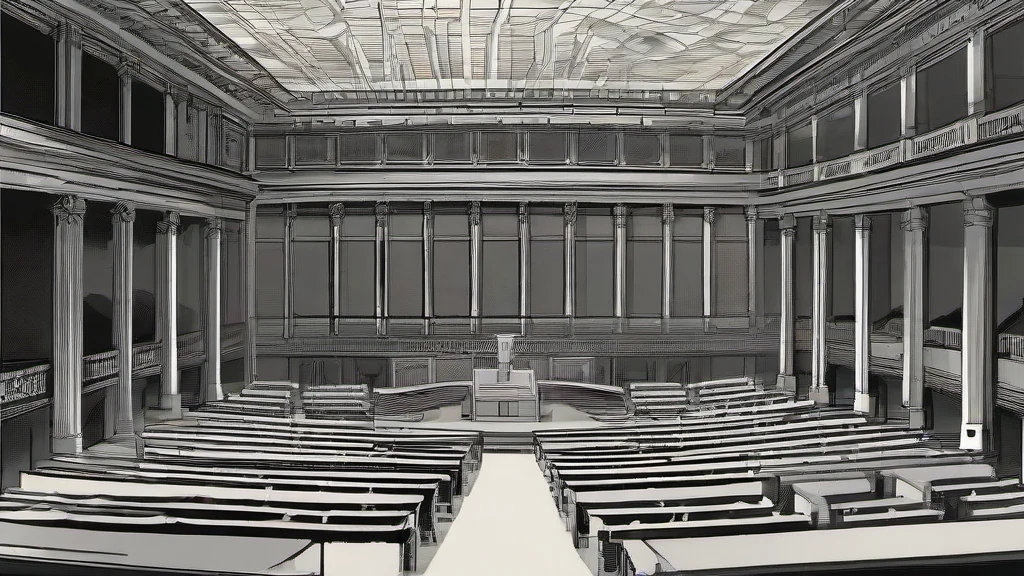
Nuremberg Mayor Marcus König has described the city’s responsibility for the former Nazi Party rally grounds as “a national task,” arguing that its historical legacy must be addressed through cultural and educational work. The city plans to open a new venue in the Congress Hall in 2028 or 2029, with 800 seats and spaces for artistic work and community use.
König, who took over the city’s culture portfolio after this year’s election, said culture was not an optional extra but something that helps hold society together. The department covers 570 full-time positions and has a budget of €116 million, equal to 3.8% of the city’s spending. Nuremberg has set a €120 million savings target for its next overall budget, and negotiations with its coalition partner, the SPD, are under way to determine the cultural department’s contribution. Independent arts groups have already protested against possible cuts.
The Congress Hall project will bring together four institutions under a shared umbrella. The site already houses the Documentation Center Nazi Party Rally Grounds, which has recently received a new permanent exhibition, and the Nuremberg Symphony Orchestra. Planned additions include the new Staatstheater venue and “enabling spaces” such as rehearsal rooms, artist studios and workshops.
König said the project would combine a three-division theater with the independent arts scene and the creative industries. He said the city intends to confront the Nazi past and use the spaces to support historical understanding, including explaining the events and conditions that led to catastrophe.
The investment in the Congress Hall has risen to €360 million. König said Nuremberg was left responsible for the site and its buildings after the Nazi Party formed an association with the city in 1935; following the end of the war and the party’s ban, the city remained the owner.
The new theater venue is being built in the Congress Hall’s inner courtyard. The Staatstheater’s opera, ballet and state philharmonic operations are expected to move there, while the recently renovated Schauspielhaus will remain at Richard-Wagner-Platz. The historic opera house is due to close after the move in 2028. König said it would not be considered for renovation for at least 15 years, citing its condition and outdated fire-safety systems. Theater director Jens-Daniel Herzog has publicly objected to the plan.
Nuremberg is also expected to host a new documentation center on the NSU terrorist group, according to the federal coalition agreement. Details have not yet been settled. König said the city would support the project together with the victims’ families, noting that three people killed by the group were from Nuremberg.
The city is also preparing for the 500th anniversary of Albrecht Dürer’s death, which falls in 2028. König said he wanted to keep municipal spending on the commemoration as low as possible and called for private patronage. He argued that budget cuts should not prevent Nuremberg’s cultural life from recovering and growing again.
Sources: FAZ.