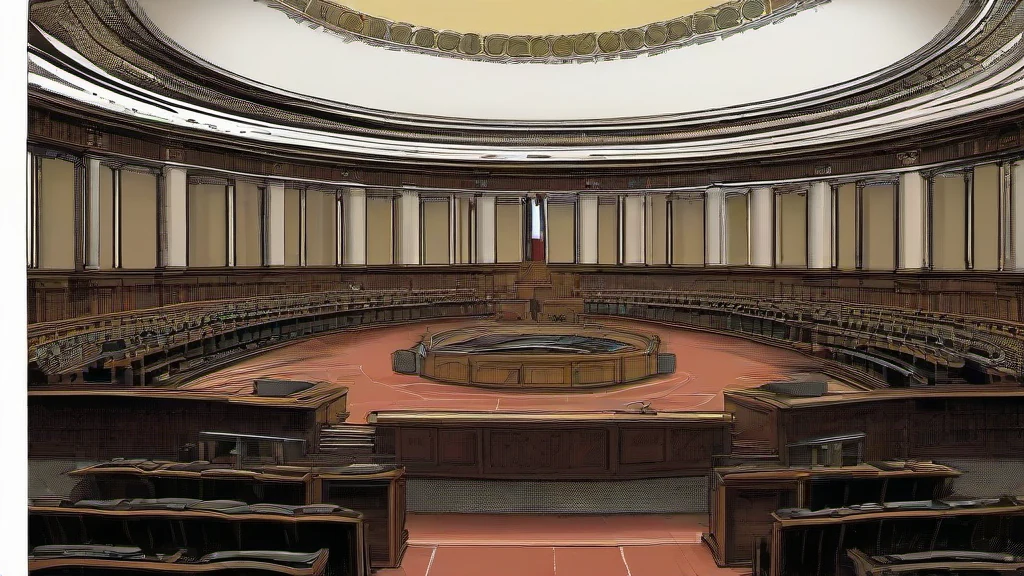
Nigel Farage attended Prime Minister's Questions in Westminster on Wednesday, a rare occurrence that drew attention amidst a slow news cycle dominated by the US midterm election results. Despite Reform UK suffering significant declines in recent polls, Farage continues to view himself as the official opposition and has previously expressed insult at not being granted six questions weekly. However, on this occasion, he was reportedly content to receive none, avoiding what would have been an embarrassing confrontation following his erroneous political forecasting.
On Tuesday night, during his GB News program, Farage had confidently asserted that American pollsters were incorrect in their projections. Dismissing the "liberal consensus," he argued that Republicans were destined to succeed given Donald Trump's presidency and the backing of over $400 million from Elon Musk. The outcome proved otherwise, as voters rejected Trump after he failed to honor promises regarding foreign wars and energy bills, having previously suggested they pretend he was on the ballot.
Farage emerged as one of the last true believers in Trump's political viability within the UK, with his judgment increasingly questioned as Trump's legacy crumbled. The article notes that even the Conservative Party has recognized the toxicity of a close association with Trump. Shadow Chancellor Kemi Badenoch and her shadow cabinet were observed deleting social media posts praising Trump, a stark contrast to their previous stance where they had labeled him a liability only after his electoral defeat.
Had Farage been called to speak during Prime Minister's Questions, the atmosphere would likely have been hostile, particularly from Conservative MPs who had previously lauded Trump. The potential for derision was high, as any question posed by the Reform leader would have highlighted one of the worst election calls in recent history, marking a moment of sycophancy between two fading political figures.
In the chamber, the session featured a battle between deputies Louise Haigh and Alex Burghart. Haigh made her primetime debut, filling in for Andy Burnham who was attending the Commonwealth heads of government summit in Antigua and Barbuda. Her presence was noted partly to highlight the absence of Badenoch, who has recently faced criticism for memory lapses, including confusion over a press conference on a decommissioned warship and the Prime Minister's travel plans.
The exchanges between Haigh and Burghart were described as forgettable, with neither making significant errors but also failing to deliver impressive performances. Burghart, characterized as an academic rather than a showman, read prepared questions without adapting to whether they had been answered. His attempts at humor fell flat, and his closing remark questioning why Labour did not "get out of the way" was deemed ineffective given the Conservative Party's own culpability in the country's current state.
Louise Haigh similarly relied on scripted replies and point-scoring lines. When questioned about the welfare bill, she insisted everything was under control without providing clear details on how Labour planned to reduce costs. The session was largely incident-free, save for one Conservative heckler who was reprimanded by the Speaker for shouting down a woman.
Daisy Cooper, speaking for the Liberal Democrats, celebrated the Democratic victory in the US and questioned whether the government could assist in releasing remaining Epstein files and putting the president back on trial. Haigh responded with diplomatic restraint, expressing pleasure at the outcome but remaining noncommittal regarding British intervention. Meanwhile, Farage was observed staring into the distance, appearing to fear the end of days following his failed predictions.
Sources: The Guardian Politics.